
Emergency Air Duct Cleaning Near Me: What Charleston Homeowners Should Do First
If you’ve found visible mold, rodent droppings, or smoke residue in your Charleston home’s ductwork, shut down your HVAC system immediately and do not run it until a specialist inspects the contamination. Document everything with photos before any cleaning begins, and call a contractor who can explain exactly how they’ll handle your specific contamination type — not just someone who promises “same-day service.” If you’d rather not navigate this alone, call Nova Air Duct Cleaning West Virginia at (877) 361-9762 for a free assessment.
Here’s a mistake we see constantly in Charleston: homeowners discover something alarming in their vents, panic-dial the first “emergency” result on Google, then leave their system running while they wait. In Kanawha County’s humid climate, that three-hour window can turn a contained second-floor mold patch into a whole-house spore distribution. After 14 years of cleaning ducts across Charleston — from the hills of South Hills to the riverfront properties in Kanawha City — we’ve learned that the first 30 minutes after discovery matter more than the cleaning itself.
Three Real Duct Emergencies (and the First Step for Each)
Not every duct problem is an emergency. Most Charleston homes need routine cleaning every three to five years. But three situations demand immediate, specific action before anyone touches a vacuum hose.
Mold Discovery in Your Ductwork
Charleston’s summer humidity routinely pushes indoor moisture above 60 percent, especially in older homes with crawl space duct runs. When you spot fuzzy growth on vent covers or smell that damp, earthy odor from supply registers:
- Shut off the HVAC completely. Every minute the blower runs, it acts as a spore dispersal system. We’ve seen homes in the East End where a localized attic mold issue became a bedroom contamination because the homeowner kept the AC running for “comfort” while waiting for us.
- Do not disturb the growth. Don’t poke it, vacuum it, or spray bleach into the register. Bleach on porous duct liner creates a wetter environment — mold’s favorite condition.
- Photograph the visible area and note the date. West Virginia homeowner policies vary on mold coverage, and documentation starts the clock on your claim.
Only after these steps should you call for inspection. A legitimate technician will want to know whether you’ve shut the system down — if they don’t ask, they may not understand containment protocol.
Evidence of Rodents or Nesting
Droppings, shredded insulation, or that distinct ammonia smell from vents mean rodents have accessed your duct system. In Charleston’s older neighborhoods — think North Hills or the homes near Cato Park — we’ve found squirrel and raccoon entry through deteriorated soffits that connect directly to return air chases.
- Shut down the system. Rodent waste dries into particulate that your blower will distribute. Hantavirus and leptospirosis are genuine concerns, not scare tactics.
- Locate and seal the entry point before cleaning. We’ve been called to homes where a franchise crew cleaned beautifully but never found the gnawed access in the garage soffit. The rats returned within two weeks, and the homeowner paid twice.
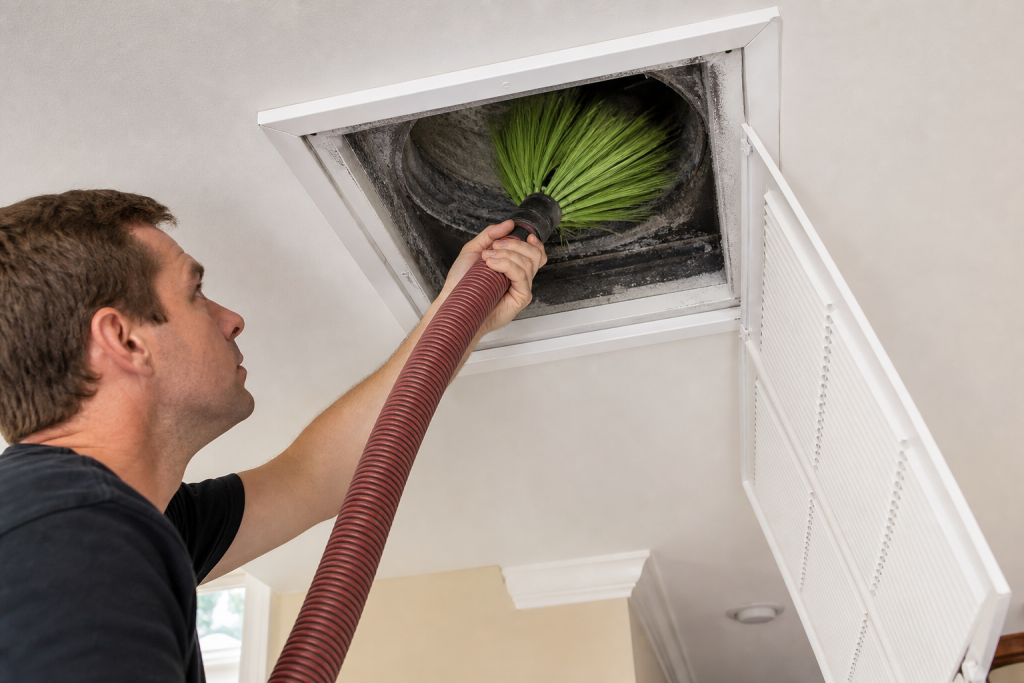
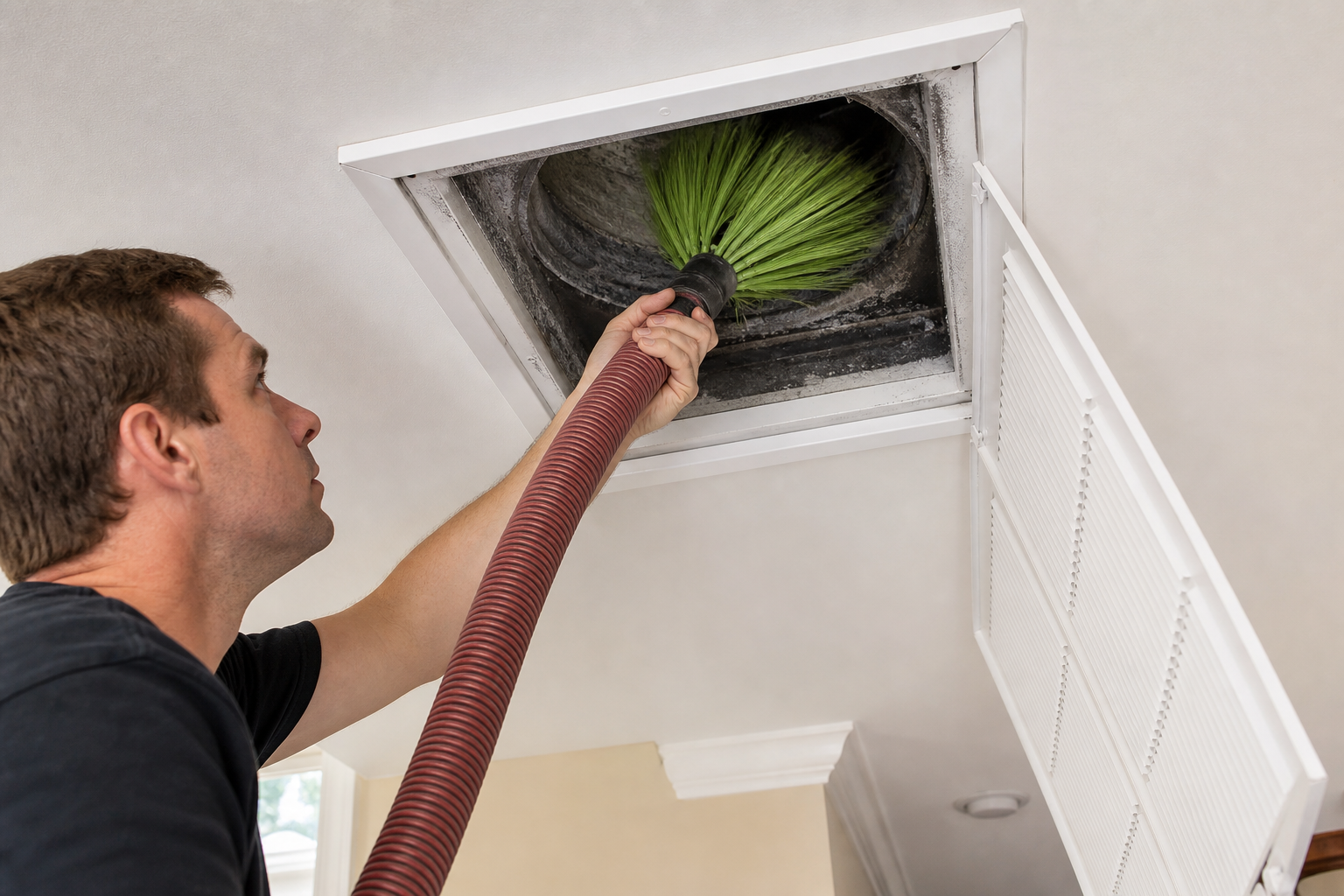
- Ask your contractor about biocide application. Rotobrush mechanical cleaning removes debris, but rodent contamination requires EPA-registered sanitizers. We apply Guardsman products specifically rated for this scenario.
Post-Fire or Heavy Smoke Contamination
Kitchen fires, fireplace backdrafts, or neighborhood wildfire smoke can deposit particulate deep in ductwork. Charleston’s tight river valley geography means smoke lingers — we see this every fall when inversion layers trap wood-burning particulate in the Kanawha Valley.
- Do not operate the HVAC until assessed. Soot is acidic and will etch metal components over time. More urgently, it will redistribute odor compounds throughout the home.
- Contact your insurance adjuster before authorizing cleaning. Smoke remediation often falls under “additional living expenses” coverage, and carriers want to approve the scope. Get a claim number.
- Request thermal fogging or ozone treatment capability. Surface cleaning won’t neutralize odor molecules absorbed into duct liner. Our Nikro negative-pressure systems paired with targeted fogging address the source, not just the symptom.
Why “Same-Day Emergency” Is Often a Marketing Category, Not a Technical One
Here’s something the industry doesn’t advertise: there is no ANSI or NADCA certification for “emergency duct cleaning.” It’s a dispatch speed claim, not a technical distinction. The actual work — rotary brush agitation, negative-pressure extraction, sanitizer application — uses identical equipment whether scheduled tomorrow or in three days.
What changes is containment protocol and assessment thoroughness. A technician rushing to three “emergency” calls before lunch won’t spend 20 minutes tracing your moisture source. In our experience, the mold callbacks we handle in Charleston almost always trace to rushed initial assessments — someone cleaned what was visible without finding the bathroom exhaust leak that fed the problem.
Real urgency applies to the three scenarios above. For routine dust buildup, allergy symptoms, or “it’s been a while” maintenance, scheduling within the week produces better outcomes than paying premium rates for speed you don’t need. Ask yourself: is something actively getting worse while I wait, or am I just anxious? If it’s the latter, standard scheduling is the smarter choice.
What to Document Before Any Emergency Cleaning Begins
West Virginia operates under a “file and use” insurance framework where homeowner policy interpretation varies by carrier. For contamination events that might trigger coverage — mold from covered water damage, smoke from sudden fire, rodent damage after a storm-created entry point — documentation determines whether your claim succeeds.
Before your contractor arrives:
- Photograph all visible contamination with date stamps. Include surrounding areas to establish extent.
- Record HVAC runtime since discovery. “System ran for four hours after I found the mold” helps adjusters assess distribution.
- Preserve any damaged materials the contractor removes. Don’t let them haul everything away same-day if insurance may need inspection.
- Request a written scope of work before authorization. Vague “clean the ducts” invoices get rejected. Specific line items — “HEPA vacuum return trunk, rotary brush clean supply branches 1–12, apply EPA-registered sanitizer” — support claims.
- Note any health symptoms with dates. Correlation isn’t causation, but documented respiratory issues after contamination discovery strengthen claims.
We provide itemized, photo-documented reports for every Charleston job that might involve insurance. It’s extra work on our end, but we’ve seen too many homeowners eat $2,400 cleaning bills because their documentation didn’t meet adjuster standards.
Five Questions to Ask Before They Arrive
When you call any Charleston duct contractor for a potential emergency, their answers to these questions reveal whether they’re equipped for your actual situation:
- “What containment method will you use for [mold/rodent/smoke] specifically?” If they pause or default to “our standard process,” they may not have one. Mold requires negative air isolation; smoke requires odor-neutralizing chemistry.
- “Will the same technician assess and clean, or do you send a salesperson first?” At Nova, Ronald handles both — you get the owner’s eyes on the problem, not a commission-driven estimator.
- “What equipment brand and model do you use for rotary brush cleaning?” “Commercial-grade” means nothing. We use Rotobrush and Nikro systems specifically — ask others for specifics.
- “Can you provide before-and-after photos from the duct interior?” Without visual verification, you’re trusting a verbal “looks good.” We photograph every Charleston job.
- “What is your protocol if you find the contamination is worse than initially visible?” The honest answer is “stop and reassess with you.” The wrong answer is “we’ll just keep going and adjust the bill.”
When to Call a Pro — and What We Actually Do
If you’ve shut down your system, documented the issue, and confirmed you’re dealing with mold, rodent waste, or smoke contamination, it’s time for professional assessment. In 14 years of Charleston work, we’ve learned that DIY attempts on these three scenarios almost always expand the contamination zone — usually by disturbing material without proper extraction and filtration.
Our process for genuine emergencies: Ronald arrives with a Nikro portable HEPA system and Rotobrush rotary tools, assesses containment needs, photographs everything for your records, and explains exactly what we’ll do before starting. For mold, we establish negative pressure; for rodents, we verify entry sealing; for smoke, we test odor penetration depth. No surprises, no upsell to services you don’t need.
Related services in Charleston: If your situation involves dryer vent blockage (a legitimate fire emergency with its own response protocol), see our Dryer Vent Cleaning in Charleston page. For full system contamination, our HVAC Cleaning in Charleston service addresses coil and blower housing issues that duct-only cleaning misses.
Key Takeaways
- Shut down your HVAC immediately for mold, rodents, or smoke — running the system makes every scenario worse.
- Document before cleaning for insurance; West Virginia carriers require specific proof for contamination claims.
- “Emergency” speed matters less than proper containment protocol — ask how they’ll handle your specific contamination.
- Most Charleston duct cleaning is routine maintenance, not urgent. Reserve same-day premiums for active health hazards.
- Verify equipment brands and technician identity before authorizing work.
The Bottom Line
Charleston’s humidity, older housing stock, and valley geography create genuine duct contamination risks that demand specific first steps. The homeowners we see recover fastest aren’t the ones who called first — they’re the ones who stopped their HVAC, documented thoroughly, and asked the right questions before anyone started cleaning. If you’re facing a duct emergency in Charleston and want an owner-operator who’ll assess it honestly, Nova Air Duct Cleaning West Virginia offers free estimates. Call (877) 361-9762 and you’ll speak directly with Ronald about what’s actually happening in your system.
Frequently Asked Questions
Emergency duct cleaning in Charleston typically runs $400–$800 for residential systems, with mold or smoke remediation reaching $1,200–$2,500 depending on contamination extent and required containment. True emergencies requiring negative-pressure isolation or specialized sanitizers cost more than routine cleaning because of equipment and labor intensity. Call (877) 361-9762 for an exact quote — our estimates are free and specific to your situation.
No — visible mold in ductwork requires professional assessment because spores distribute through the entire system the moment you disturb them, and bleach worsens the problem on porous surfaces. Charleston’s humidity means mold almost always indicates an underlying moisture source that DIY cleaning won’t address. We use Rotobrush mechanical removal with HEPA containment, followed by EPA-registered treatment — not surface spraying. Call (877) 361-9762 before touching the growth.
For genuine contamination emergencies — mold, rodent waste, or post-fire smoke — we typically assess same-day or next-morning in the Charleston metro area, including South Hills, Kanawha City, and North Hills. Routine cleaning schedules within 3–5 business days. We don’t charge premium “emergency” rates for standard maintenance calls; if your situation isn’t actively hazardous, we’ll tell you honestly and book standard service. Call (877) 361-9762 to discuss timeline.
It depends on the cause: sudden water damage that causes mold, fire smoke, or storm-created rodent entry may be covered, but long-term maintenance issues and gradual mold growth typically are not. Documentation before cleaning — photos, dates, HVAC runtime records — dramatically improves claim success. We provide itemized, photo-documented reports for insurance submission. For claim-specific questions, call (877) 361-9762 and we’ll walk through what your carrier will likely need.
Written by Ronald Sanchez, Owner & Lead Technician at Nova Air Duct Cleaning West Virginia, serving Charleston since 2012.
Need Air Duct Cleaning Help?
Call Nova Air Duct Cleaning West Virginia — licensed & insured, here with fast after-hours help in West Virginia.
(877) 361-9762