
Is Air Duct Cleaning Worth It in West Virginia? Here’s the Honest Answer
Air duct cleaning is worth it in West Virginia if your home has visible debris at registers, musty odors from crawlspace ducts, recent renovation dust, or unknown maintenance history — but it’s not automatically necessary for every home every three years. For newer builds with fiberglass duct board cleaned recently and no pets or construction, the return on investment is lower. The honest answer depends on your duct material, your home’s age, and whether your system runs through the humid crawlspaces common across the state. If you’re unsure, call Nova Air Duct Cleaning West Virginia at (877) 361-9762 — Ronald Sanchez offers a no-pressure inspection, not a sales pitch.

What Ronald Has Actually Found Inside West Virginia Duct Systems
After 14 years crawling through attics and crawlspaces from Charleston to Morgantown, we’ve seen ductwork that genuinely needed intervention and ductwork that was fine. The difference isn’t marketing — it’s physics and maintenance history.
West Virginia’s housing stock skews older. Many homes built between 1960 and 1990 still run original galvanized steel or early flex duct through unconditioned crawlspaces. In the Kanawha Valley and Monongahela River basin, summer humidity regularly pushes 75-80%. That moisture collects in low-lying return ducts, especially where flex duct sags between joists. We’ve pulled handfuls of organic debris — not just dust, but active mold staining — from systems in South Hills, the West Side, and older neighborhoods in Huntington where crawlspace ventilation was never upgraded.
Conversely, a 2018 build in Bridgeport with properly sealed duct board, a dehumidifier-maintained crawlspace, and no pets? We told that homeowner to check back in five years. “Clean ducts aren’t a luxury — they’re just the part of your house you forgot to look at.” The worth-it calculation starts with what’s actually in there, not a calendar reminder.
When Duct Cleaning Is Clearly Worth the Investment
These are the conditions where we see measurable improvement in airflow, odor, and system efficiency — and where our Air Duct Cleaning service delivers real value:
- Visible debris at supply registers. If you wipe a vent cover and get gray-black buildup, that material is already circulating. In homes near Charleston’s railroad corridors or former industrial zones, we’ve found fine particulate that standard filters won’t catch.
- Post-renovation dust infiltration. Drywall compound, fiberglass insulation fragments, and sawdust enter ductwork during remodeling. We cleaned a system in the East End last year where the homeowner had renovated two rooms — six months later, dust was still blowing from returns on the opposite side of the house.
- Documented rodent activity. Rural WV properties, especially near wooded areas in Putnam and Kanawha counties, see mice enter crawlspace ducts through damaged flex connections. Droppings and nesting material create genuine health hazards, not cosmetic concerns. This requires cleaning plus sealing — one without the other wastes your money.
- Musty or earthy odors when HVAC runs. That smell is microbial growth on organic debris in damp ductwork. We’ve traced this to sagging flex duct in Parkersburg crawlspaces where groundwater seepage kept the bottom two feet of return trunk constantly wet.
- Home purchase with unknown maintenance history. If the previous owner can’t tell you when ducts were last inspected, assume they weren’t. We find original construction debris — drywall chunks, wood scraps, even soda cans — in systems that have never been opened.
- Allergy symptoms that worsen indoors. When a homeowner’s physician has ruled out other triggers and the timing correlates with HVAC runtime, duct contamination is a legitimate suspect. We’ve had customers in the Chemical Valley area report reduced antihistamine reliance after thorough cleaning and sanitizing with Abatement Technologies products.
When It May Not Be Worth It — And We’ll Tell You
This is where we differ from franchise operations running volume-based sales models. Ronald handles your job personally — you’re not getting a subcontractor with a commission quota. Here are the conditions where we advise waiting:
Newer home, recent cleaning, no risk factors. A 2019 build in Teays Valley with duct board cleaned 30 months ago, no pets, no renovations, and a conditioned crawlspace? The EPA’s position aligns with our assessment: routine cleaning isn’t justified. We charge for honest inspections, but we’d rather earn a call in 2025 than sell you unnecessary service today.
Systems with intact fiberglass duct board in dry environments. If your ductwork is properly sealed and your crawlspace maintains relative humidity below 60%, dust accumulation slows dramatically. We’ve inspected systems in drier ridge-top homes in Randolph County that were functionally clean after four years.
Expecting dramatic energy savings. The NADCA cites potential efficiency gains, but in practice, a lightly dusted system doesn’t strain blower motors measurably. The worth-it case is air quality and system longevity, not a 30% utility bill reduction. Anyone promising that is selling fiction.
Our 734 customer reviews averaging 4.7 stars include several where we recommended against immediate service. Those reviews matter more to us than a single upsell — they prove our inspection process works.
West Virginia’s Climate Changes the Math
This is the regional factor most national articles miss. West Virginia’s worth-it calculation differs from Arizona or Minnesota.
Homes with crawlspace duct runs in the state’s humid zones — essentially the western and central counties along the Ohio and Kanawha rivers — accumulate organic debris faster than slab-on-grade or attic systems in drier climates. Summer dew points in Charleston average 68°F. That moisture condenses on cool duct surfaces, especially where insulation has compressed or torn. The result is a substrate for microbial growth that dry-climate ducts simply don’t face.
We’ve documented this repeatedly:
- In Clendenin, a 1987 ranch with original flex duct: active mold staining on the interior of return flex where it dipped below the vapor barrier
- In St. Albans, a 2002 home with poorly sealed duct board: dust cakes hardened to clay consistency from repeated condensation cycles
- In Beckley, a split-level with mixed attic and crawlspace runs: the crawlspace returns needed cleaning; the attic supplies did not
The geographic and construction-specific detail matters. A national “every 3-5 years” recommendation ignores that your crawlspace in Hurricane, WV faces different conditions than a basement system in Pittsburgh or an attic system in Denver.
What Professional-Grade Cleaning Actually Costs in West Virginia
Price transparency helps you evaluate worth-it claims. These are the ranges we see for legitimate, equipment-based cleaning — not coupon specials that cover two vents and upsell the rest.
| Service Scope | Typical Range | What Determines Cost |
|---|---|---|
| Standard residential cleaning (single system, up to 12 vents) | $350 – $550 | Number of vents, duct material (flex vs. metal vs. duct board), accessibility |
| Larger home or dual-zone system | $550 – $850 | Additional air handler, extended trunk lines, more return paths |
| With dryer vent cleaning bundled | Add $120 – $180 | Length of vent run, number of elbows, roof vs. wall termination |
| Duct repair/sealing needed | $200 – $600 additional | Extent of disconnected flex, damaged seals, access difficulty |
| Air sanitizing with Guardsman or Aprilaire products | Add $150 – $250 | System size, product selection, application method |
Rotobrush and Nikro equipment — the rotary-brush and negative-pressure vacuum systems we use on every job — cost more to operate than a shop vac with a brush attachment. The difference is measurable: our systems maintain 5,000+ CFM negative pressure at the collection point, capturing debris rather than redistributing it. From cleaning to sealing to sanitizing — one call covers it all, but we quote only what you actually need.
Call (877) 361-9762 for an exact quote — estimates are free, and we’ll tell you if your system doesn’t need service yet.
The EPA’s Actual Position — Not the Cherry-Picked Version
The Environmental Protection Agency does not recommend routine air duct cleaning as scheduled maintenance. We’ve read the full guidance, not the truncated version some competitors quote. Here’s what EPA actually states:
They don’t recommend cleaning in the absence of specific problems. However, they do recommend it — explicitly — when there is substantial visible mold growth, rodent or insect infestation, or significant dust/debris release from vents. They also note that failing to clean contaminated ducts can contribute to health problems in sensitive individuals.
This isn’t contradiction; it’s nuance. The worth-it question isn’t “should everyone clean ducts annually?” It’s “does my specific system show the conditions the EPA flags?” That’s exactly what Ronald’s 14 years of focused air duct expertise is designed to determine. Over 730 homeowners have reviewed us — see what they found about our honest assessment process.
What a Real Inspection Looks Like — And Why It Matters
Our inspection protocol reflects Ronald’s training at Bridgemont Community and Technical College, where hands-on coursework emphasized diagnostic rigor over sales scripts. Here’s what actually happens:
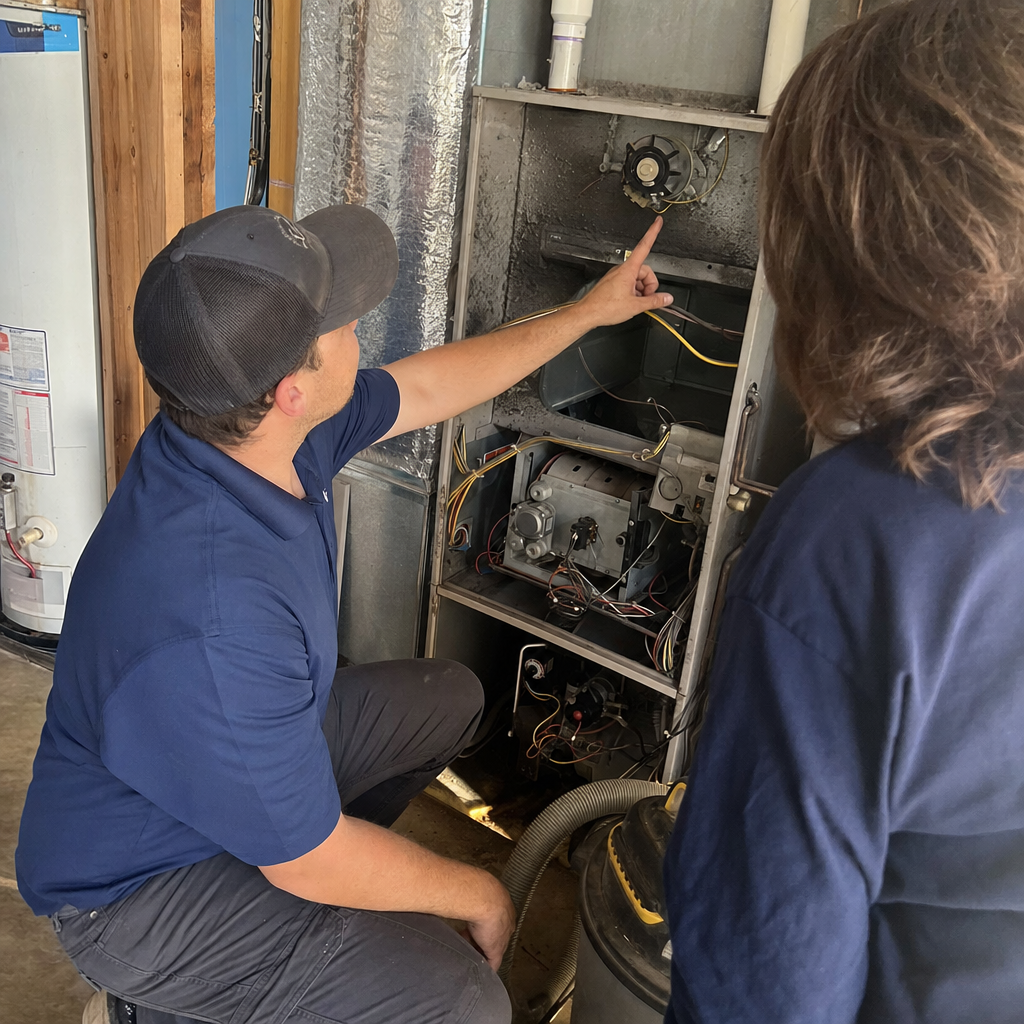
We start at the air handler, checking blower wheel condition and filter fit — a poorly seated 1-inch filter bypasses more debris than a dirty 4-inch filter catches. We then inspect accessible trunk lines and branch takeoffs with a borescope camera, documenting what we see. In West Virginia’s older homes, we pay particular attention to flex duct connections at metal boots, where tape adhesive degrades and gaps form.
We photograph findings and review them with you before quoting work. If the system is clean, we show you. If there’s rodent debris, mold staining, or construction residue, we show you that too. The diagnostic tool is 14 years of hands-on experience, not a commission sheet.
This process is why our review volume matters. 734 reviews at 4.7 stars reflect hundreds of homeowners who got honest information, not automatic upsells. Ronald grew up in Charleston’s West Side and has spent his adult life working in the same communities — that local accountability shapes how we operate.
Key Takeaways: Is Air Duct Cleaning Worth It for Your West Virginia Home?
- Worth it: visible debris, musty odors, post-renovation dust, rodent activity, unknown maintenance history, or allergy symptoms tied to HVAC runtime
- Probably not worth it now: newer home, recent cleaning, dry conditioned crawlspace, no pets or construction, no symptoms
- West Virginia’s humid crawlspace climate accelerates organic debris accumulation compared to drier regions — the regional case for inspection is stronger here
- The EPA’s nuanced guidance supports cleaning under specific conditions, not as routine maintenance
- Professional-grade equipment (Rotobrush rotary brush systems, Nikro negative-pressure collection) costs more than cut-rate alternatives because it actually removes debris rather than redistributing it
- An honest inspection from an owner-operator who does the work himself is the only way to get a trustworthy worth-it answer for your specific system
FAQs
Professional air duct cleaning in West Virginia typically runs $350–$550 for a standard single-system home with up to 12 vents, with larger or dual-zone systems reaching $550–$850. Costs increase if your home has extensive flex duct in hard-to-access crawlspaces, which is common in older Charleston and Huntington-area homes. Call (877) 361-9762 for a free exact quote based on your vent count and duct layout.
Cleaning is almost always cheaper — typically $350–$850 versus $2,500–$7,000+ for partial or full duct replacement — but replacement becomes necessary when flex duct is deteriorated, metal duct is rusted through, or contamination has penetrated porous duct board. We assess this during inspection and will recommend replacement only when cleaning would be a temporary fix on failing material. Call (877) 361-9762 and we’ll show you exactly what you’re dealing with.
There’s no fixed schedule that fits every West Virginia home — the EPA doesn’t recommend routine cleaning, but homes with crawlspace duct runs in humid zones like the Kanawha and Ohio River valleys often benefit from inspection every 3–5 years due to faster organic debris accumulation. Homes with conditioned crawlspaces, newer sealed duct board, and no risk factors may go 7–10 years. The honest answer comes from inspection, not a calendar. Call (877) 361-9762 to schedule yours.
Air duct cleaning can reduce allergy symptoms when the ductwork is a confirmed source of irritants — we’ve had customers report improvement after removing accumulated dust, pollen, and microbial debris, especially when paired with proper filtration. However, cleaning won’t help if your triggers are primarily outdoor pollen, pet dander on surfaces, or non-HVAC indoor mold. We evaluate whether your ducts are the actual source before recommending service. Call (877) 361-9762 for an assessment that targets the real problem.
If you’d rather have it looked at, Nova Air Duct Cleaning West Virginia offers a no-pressure assessment in West Virginia — call (877) 361-9762 and Ronald Sanchez will inspect your system personally, show you what he finds, and tell you straight whether cleaning is worth it for your home.
Written by Ronald Sanchez, Owner & Lead Technician at Nova Air Duct Cleaning West Virginia, serving West Virginia, WV.