
Air Duct Sanitizing Service in West Virginia: What Actually Works vs. What Just Smells Clean
Professional air duct sanitizing service in West Virginia runs $275–$550 for a typical residential system when done correctly, and it’s only worth the cost after thorough mechanical cleaning has already removed the debris that microbes feed on. We perform this service across the state — from Charleston’s river valley humidity pockets to the mountain ridge homes around Morgantown — and we turn down more sanitizing requests than we accept because not every duct system needs it. If you’re unsure whether your home qualifies, call us at (877) 361-9762 for a free inspection; Ronald Sanchez, our owner and lead technician, will tell you straight what he finds.
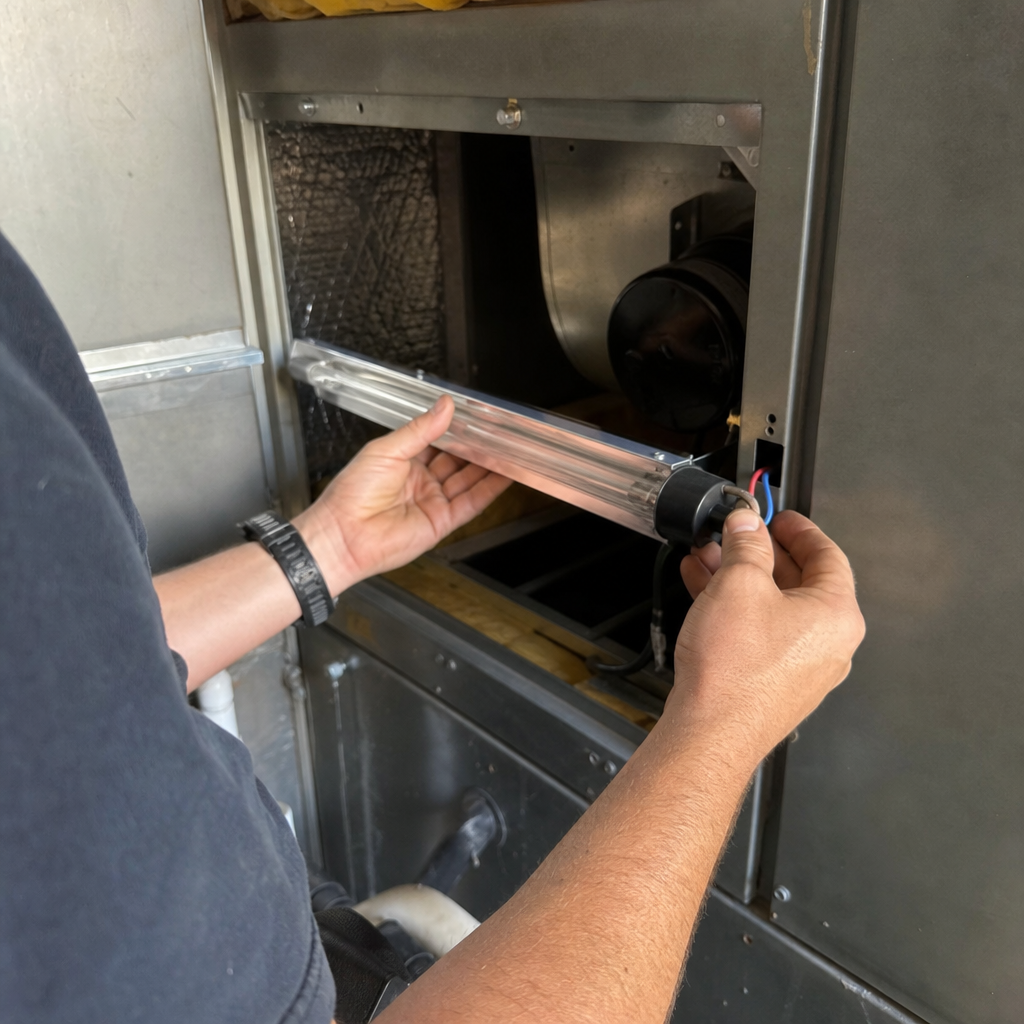
West Virginia’s climate sets us apart from drier states in ways that matter for your ducts. Our summers hang thick with humidity — particularly in low-lying areas along the Kanawha, Monongahela, and Ohio River valleys — and that moisture doesn’t stay outside. It seeps into unconditioned crawl spaces, saturates flex duct insulation, and creates the exact conditions where mold and bacterial biofilm establish themselves on duct interior surfaces. We’ve opened up systems in South Charleston homes where the flex duct looked clean from the outside but harbored a thin, slick layer of microbial growth that no homeowner could see or smell until we showed them the camera footage. That’s the reality here: humidity is the enemy, and a fogging machine pointed into your return vent won’t touch what’s actually growing on your duct walls.
Why Most “Duct Sanitizing” Is Theater — and How to Spot the Real Thing
Here’s what we’ve learned after 14 years of crawling through West Virginia attics and crawl spaces: the duct cleaning industry has turned “sanitizing” into a profitable upsell that rarely delivers what it promises. The typical bait-and-switch looks like this — a crew runs a basic vacuum through your ducts, then fires up a fogging machine that mists a scented chemical into your air handler. The house smells like a hospital for two days. Six weeks later, the smell fades and the underlying problem remains untouched.
The problem isn’t the chemical. It’s the application method. Fog creates airborne droplets that travel with the airstream and settle unevenly, if at all, on the actual duct surfaces where microbes colonize. In metal ductwork, the mist may coat the first few feet of each run before the airflow carries it past the areas that matter. In flex duct — the ribbed, insulated tubing common in West Virginia homes built from the 1980s through the mid-2000s — the fog barely contacts the valleys between corrugations where condensation pools and mold takes hold.
Legitimate duct sanitizing requires three things that most services skip:
- Pre-cleaning with mechanical agitation — We use Rotobrush rotary brush systems and Nikro negative-pressure vacuums to physically remove the dust, pollen, and organic debris that microbes eat. Sanitizing a dirty duct is like disinfecting a floor you haven’t swept: the chemical can’t reach the surface it needs to treat.
- Direct surface contact application — After cleaning, we apply EPA-registered antimicrobial products using methods that ensure coating of the actual duct interior, not just the air passing through. This means accessing each supply and return run individually, not hoping fog drifts where it needs to go.
- Moisture source identification — In West Virginia, this is non-negotiable. If your crawl space humidity runs 70% in July, or your duct insulation is saturated from a condensate line leak, sanitizing is a temporary bandage. We look for these conditions first and tell you what we find.
We’ve walked away from jobs where a homeowner wanted sanitizing but the real problem was a disconnected return duct pulling fiberglass-laden crawl space air into their living space. No chemical fixes that. Ronald handles your job personally — you’re not getting a subcontractor who works off a script.
What West Virginia’s Humidity Does to Your Ducts (And Why Sanitizing Matters More Here)
The geography of this state works against duct systems in specific ways. Our river valleys — Charleston, Huntington, Parkersburg, Wheeling — trap humid air against the hillsides where neighborhoods like the West Side, South Hills, and Guyandotte sit. Summer dew points regularly climb into the upper 60s, and that moisture finds every gap in your building envelope. We’ve inspected duct systems in Kanawha County split-levels where the flex duct in the crawl space was literally dripping condensation on the vapor barrier below it. That’s not a cleaning problem. That’s a moisture problem that becomes a microbial problem.
Mountain homes have the opposite issue: temperature differentials. A duct running through an unconditioned attic in a Pocahontas County cabin might see 95°F outside air against 55°F conditioned air inside the duct. The resulting condensation on the exterior insulation migrates inward, saturating the fiberglass over years. When we cut open that ductwork, we find the interior liner delaminated and harboring growth that the homeowner never suspected.
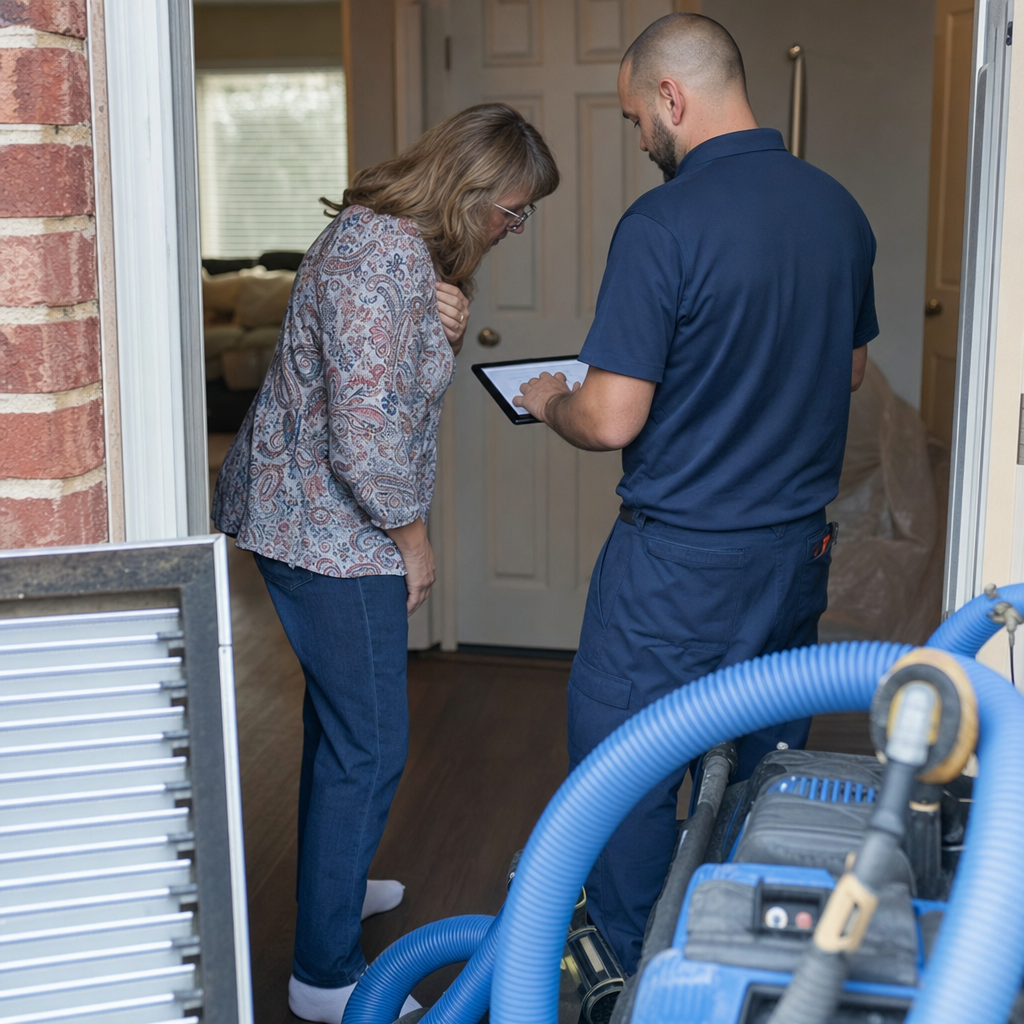
This is why our Air Quality & Sanitizing in West Virginia service starts with inspection, not sales. We carry borescope cameras on every truck and show you what we’re seeing before we recommend anything. Over 730 homeowners have reviewed us — see what they found.
When Sanitizing Actually Makes Sense (And When It Doesn’t)
We recommend duct sanitizing in four specific situations — not as a default add-on, but as a targeted response to documented conditions:
- Visible mold growth inside ductwork, confirmed by camera inspection. We document this with photos and show you before recommending treatment.
- Recent water intrusion events — burst pipes, roof leaks, or condensate overflow that saturated duct insulation. Even after drying, residual microbial contamination often remains.
- Persistent pet odor penetration into ductwork, where organic matter has worked into porous duct liner materials that mechanical cleaning alone won’t restore.
- Post-remediation HVAC systems, where mold abatement contractors have cleared the structure but the duct system needs antimicrobial treatment before restart.
We do not recommend sanitizing for routine maintenance cleaning, for “freshness,” or as a preventive measure in dry, well-maintained systems. It’s a targeted tool, not a wellness product. From cleaning to sealing to sanitizing — one call covers it all.
What Professional Duct Sanitizing Costs in West Virginia
Pricing varies with system size, accessibility, and whether we’re treating the full duct network or targeting specific problem zones. The table below reflects what we charge after mechanical cleaning has already been performed. Sanitizing unclean ducts is something we won’t do — it’s a waste of your money and our reputation.
| Service Component | Price Range |
|---|---|
| Whole-home duct sanitizing (after cleaning), 1-2 system | $275 – $425 |
| Whole-home duct sanitizing (after cleaning), 3+ system or commercial | $425 – $550 |
| Targeted zone sanitizing (single problem branch) | $150 – $225 |
| EPA-registered antimicrobial application with moisture assessment | Included in above |
| Post-treatment air quality verification (particle count) | $75 – $125 |
These prices assume your duct system has already been mechanically cleaned to NADCA-equivalent standards. If we haven’t cleaned your system, we’ll quote the full cleaning-plus-sanitizing scope as one project. We don’t piecemeal it to hit a lower number — that serves nobody.
What Products and Equipment We Use (And Why the Brand Matters)
Not all antimicrobial treatments are equal, and not all are legal for HVAC application. We use EPA-registered products from Abatement Technologies and Guardsman — formulations specifically labeled for use in ductwork, with documented efficacy against the mold and bacterial species common in humid-climate HVAC systems. These aren’t consumer-grade sprays relabeled for commercial use; they’re professional products with specific dwell-time requirements and safety protocols that we follow precisely.
Our application equipment pairs with the same Rotobrush and Nikro systems we use for cleaning. After agitation and vacuum extraction, we can access each duct run individually to ensure the antimicrobial agent contacts the full interior surface. In West Virginia’s older housing stock — the 1920s Charleston foursquares with modified gravity systems, the 1970s ranch homes with original flex duct — this targeted access matters more than in new construction with straight, accessible metal duct runs.
We also integrate Honeywell and Aprilaire whole-home dehumidification and filtration solutions when the underlying moisture problem exceeds what duct treatment alone can address. Sanitizing a system that remains chronically damp is repeating the same repair every two years. We’d rather fix it once.
How Our Process Differs From Franchise Operations
Most duct cleaning companies in West Virginia — particularly the national franchise brands — send technicians who’ve completed a two-week training course and work from a standardized script. The technician who inspects your system isn’t the one who decides whether sanitizing gets recommended; that’s a call center or a commission structure driving the upsell.
Our model is deliberately different. Ronald Sanchez grew up in Charleston’s West Side and has spent the better part of his adult life working in the homes and businesses of the same communities he was raised in. He picked up his foundational HVAC and mechanical systems training at Bridgemont Community and Technical College, where hands-on coursework pushed him toward the indoor air quality side of the trade early on. When you call Nova Air Duct Cleaning, Ronald handles your job personally — you’re not getting a subcontractor. He inspects your ductwork with a borescope, explains what he’s seeing in plain language, and makes the sanitizing recommendation (or the decision not to recommend it) based on actual conditions, not a sales quota.
We’ve built this approach over 14 years and 734 verified reviews averaging 4.7 stars. That volume of feedback reflects something simple: we show up, we do what we said we’d do, and we don’t invent problems to sell solutions.
FAQs
Professional air duct sanitizing service in West Virginia typically costs $275–$550 for residential systems after mechanical cleaning has been completed. The lower end covers single-system homes with straightforward access; the upper end applies to larger homes, multiple HVAC systems, or commercial properties with extensive duct networks. We don’t price over the phone without seeing your system — call (877) 361-9762 for a free inspection and exact quote.
No — fogging is not professional duct sanitizing, and in most cases it’s ineffective. Fog creates airborne mist that travels with airflow and settles unevenly, often missing the actual duct surfaces where microbes grow, especially in flex duct corrugations. True sanitizing requires direct surface application after mechanical cleaning has removed the debris that shields microbes from chemical contact. If a company offers to “sanitize” your ducts without cleaning them first, you’re paying for scent, not sanitation.
No, most homes do not need duct sanitizing after routine cleaning. We recommend it only for documented mold growth, recent water intrusion, persistent organic odors, or post-remediation situations. In dry, well-maintained systems, sanitizing adds no measurable benefit and we won’t sell it. Ronald inspects every system personally and tells you straight whether your ducts qualify — no upsell, no scare tactics.
Whole-home duct sanitizing takes 2–4 hours after mechanical cleaning is complete, and you can typically restart your HVAC system within 4–6 hours. The EPA-registered products we use require specific dwell times on duct surfaces before airflow resumes, and we verify this with timed protocols rather than guesswork. We’ll give you a precise restart time before we leave your home. Call (877) 361-9762 to schedule — estimates are free, and we’ll show you exactly what we’re treating before any work begins.
Ready to Find Out If Your Ducts Actually Need Sanitizing?
Clean ducts aren’t a luxury — they’re just the part of your house you forgot to look at. If you’re dealing with musty airflow, visible mold concerns, or persistent odors that standard cleaning hasn’t resolved, we’ll inspect your system honestly and tell you whether sanitizing is warranted or whether the real fix lies elsewhere. No fog-and-pray treatments, no commission-driven upsells — just 14 years of focused air duct expertise applied to your actual conditions. Call (877) 361-9762 today for your free estimate, or visit our home page to learn more about our full range of indoor air quality services across West Virginia.
Written by Ronald Sanchez, Owner & Lead Technician at Nova Air Duct Cleaning West Virginia, serving West Virginia, WV.